

Leveraging Verification to Create the Future of Benefits Eligibility: Why Purpose-Built Verification Is the Foundation for Modernizing Human Services Administration

By:
Melissa Wolf, Director, Government Strategy & Operations
For 22 years, I sat on the “other side of the table.” As a leader of human services programs like Medicaid and the Supplemental Nutrition Assistance Program (SNAP), I lived the reality that most agency directors face today: the constant pressure of shrinking timelines, the weight of massive caseloads, and the persistent, nagging frustration of seeing applicants in moments of genuine need stalled by paperwork that was meant to help, not hinder, them. During my tenure, I reviewed countless technology solutions that promised to “modernize” service delivery and lessen the pressures that my team and I faced, but the promises often fell short. The reason is that many of these solutions were developed for use in other industries and then adapted for government.
With stakes so high, as human services agencies across the country work to implement the expanded eligibility requirements mandated by H.R. 1, improve accuracy, and absorb rising workloads, the verification technology they choose, and the genesis of the solution and what it was built to do, and for whom, matters more than ever.
Why “Purpose-Built” Verification Is Critical for Human Services Agencies
A purpose-built verification solution is one engineered, from the ground up, to address the unique regulatory and administrative complexities of human services, rather than simply adapting verification tools originally built to address other industries for government use. A purpose-built approach ensures that the tools themselves are designed to reflect the specific realities of public benefit programs and drive outcomes that matter most, including accuracy, program integrity, and timeliness to deliver.
By creating technology in deep collaboration with agency leaders, program experts, and applicants with lived experience, purpose-built solutions speak the language of public services. They are designed to intervene at the most critical points of the eligibility process, ensuring that agencies can prioritize program integrity and accuracy without creating unnecessary friction for those they serve.
A purpose-built approach acknowledges three key “customer groups” who must be served:
1. The Agency: The human services agency, which needs to maintain program integrity and meet federal reporting standards while regaining administrative capacity.
2. The Applicant: The applicant, who needs to submit income, hours, and employment to prove eligibility without being subjected to burdensome “document chasing” that feels like a barrier.
3. The Taxpayer: The broader public, which expects and deserves government efficiency and program integrity.
Questions to Ask When Selecting a Verification Partner
Choosing a verification partner is a strategic decision that goes beyond procurement; it is a fundamental choice about how your agency will operate.
Too often, agencies fall into the trap of evaluating technology based on a “features list” without understanding the impact on workflow and how it dictates eligibility determinations will be made when implemented.
If you are an agency leader currently evaluating potential verification solutions, I encourage you to ask the hard questions that reveal whether a product is truly purpose-built and designed for the mission of public services:
- Does the solution provide the comprehensive data reporting you need? Is anything missing?
- What is the realistic timeline for implementation?
- Can the product be customized or will it dictate workflow and how your agency determines benefit eligibility?
- Can the solution support multiple programs (e.g., SNAP, Medicaid, Temporary Assistance for Needy Families) simultaneously?
- How does the solution help you mitigate known areas of friction in the eligibility determination process?
- How does the solution help eliminate opportunities for errors to occur?
- How does the solution help regain staff capacity?
- What is built into the solution to drive outcomes that matter, such as improved accuracy, decreased benefit delivery time, and reduced administrative burden?
- What is the ease of use for both agency staff and applicants?
- What level of training support does the vendor provide? Do trainers understand what is important to agencies?
- How are product enhancements handled, particularly as new policy updates occur?
Meeting the Moment With Purpose
We are in a unique moment in history. The mandated, expanded H.R. 1 requirements are not only a shift in policy, but a stress test for the entire public benefit infrastructure. To pass this test, human services agencies need more than just any technology. They need a solution built for their mission.
Effective eligibility modernization requires us to demand better from the technology we use. By choosing verification solutions designed specifically for human services by former human services leaders who have carried the weight of this work and are informed by benefit recipients with lived experience, agencies aren’t just verifying data. They are serving their citizens with more speed, more accuracy, and, ultimately, more compassion. And that, ultimately, is how purpose-built technology will shape the future of benefits eligibility and modernize human services administration.
Other articles
See more
.png)
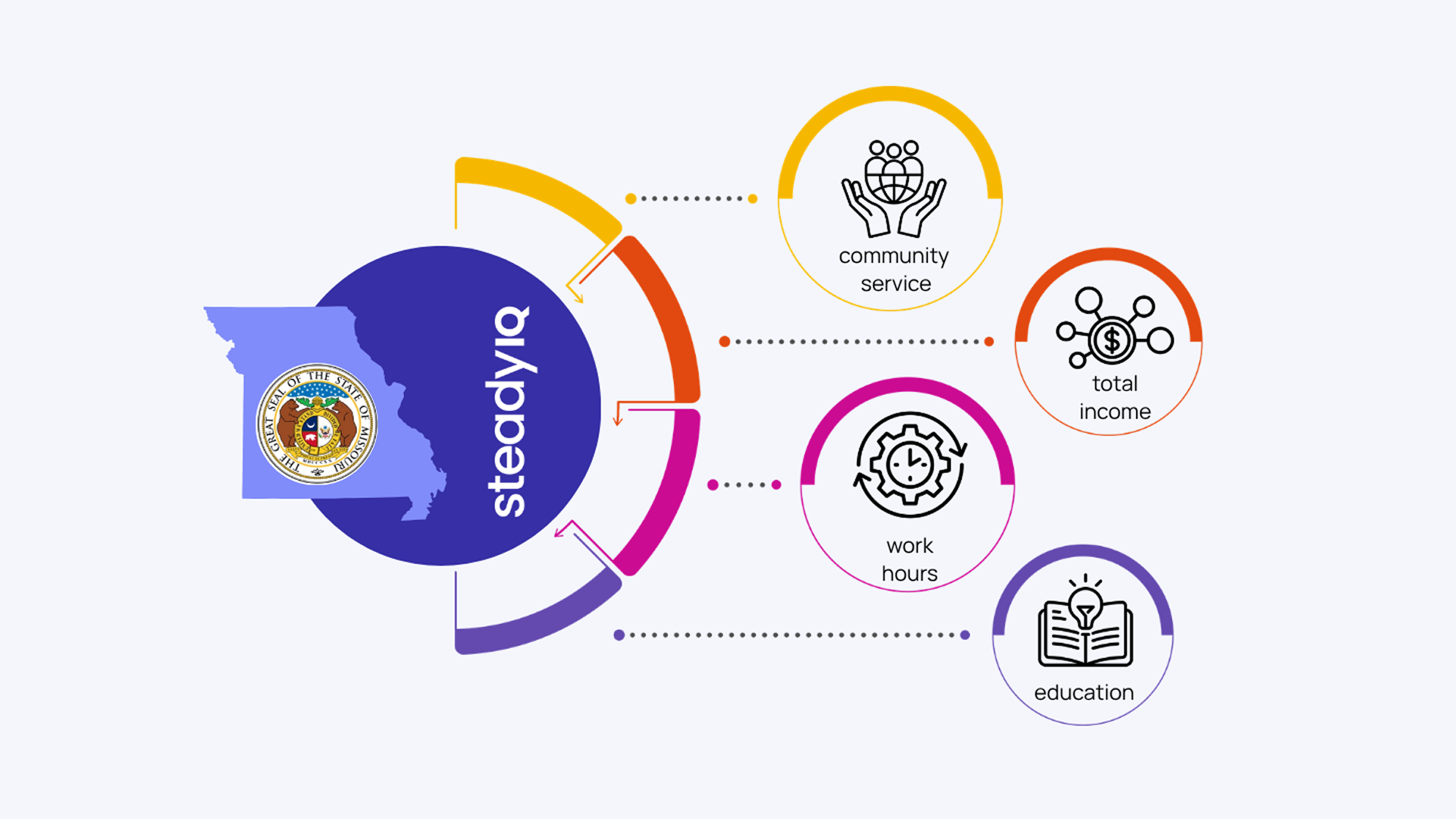
Streamline your eligibility verification with SteadyIQ.
Book a demo to see how our Verification Hub can simplify your verification workflows, reduce costs, and improve accuracy.